Key Takeaway
Bathroom remodeling on a budget works best when you keep the existing layout, repair or refinish what’s still sound, and invest first in waterproofing, ventilation, and skilled installation. Most homeowners can achieve a genuine transformation through paint, lighting, hardware, and one focal surface without touching plumbing. WaterSense fixtures can save an average family close to 13,000 gallons a year, adding long-term value to a modest investment. Decisions made before demolition control cost more than any single product choice.
The most reliable way to remodel a bathroom on a budget is to keep the existing layout, repair or refinish anything that’s still sound, and put your money first into waterproofing, ventilation, plumbing, and skilled installation. Then create the visible transformation through a few carefully chosen surfaces and fixtures. That order matters more than any single product you pick.
If you’re a homeowner who wants a real transformation without surprise costs or a project that stalls halfway through, this guide is for you. Like any home renovation, a bathroom rewards planning more than it rewards shopping. We’ll walk through a decision framework for choosing your scope, a condition-based guide for deciding what to repair, refinish, or replace, and a checklist to run before anyone swings a hammer.
What “Bathroom Remodeling on a Budget” Really Means
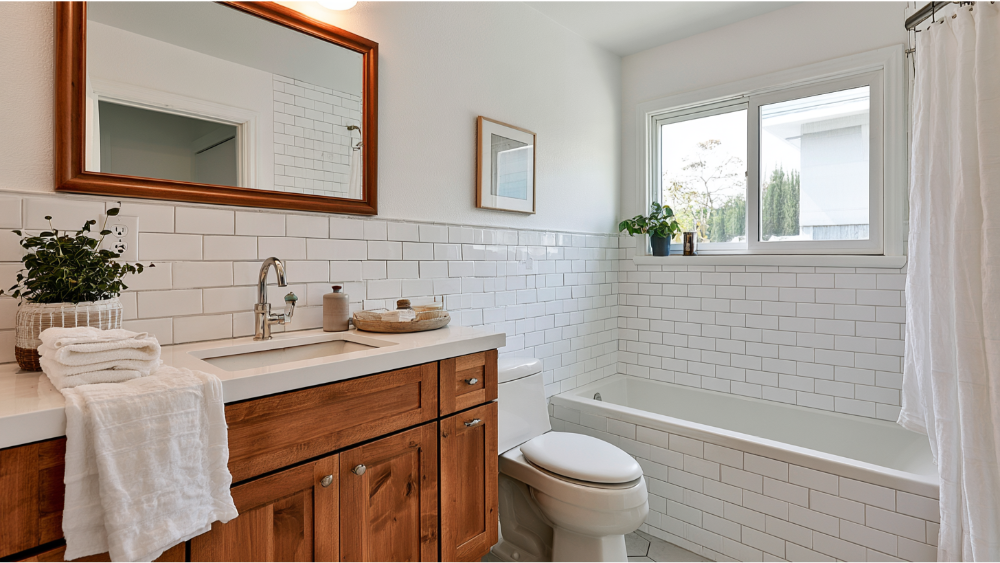
A budget is a defined scope paired with a defined investment. It isn’t a license to buy the lowest-grade materials available or skip work the room needs. Those two choices feel like savings for about eighteen months, then they come back as a repair bill.
It also helps to draw a clean line between three different things. Decorating means new towels, a shower curtain, a plant on the counter. A cosmetic refresh means paint, lighting, hardware, a mirror, maybe flooring, with nothing touched behind the walls. A true remodel changes components, surfaces, or systems. Most “budget bathroom remodel ideas” lists you’ll find online are decorating lists wearing a remodel label.
Craftsmanship is the baseline here, not a premium add-on. Budget control starts with decisions, not demolition.
Start With Condition, Not Inspiration: What to Check First
Before you pick a tile or a paint color, walk into the room with a flashlight and look at what’s actually happening. Here’s what to check:
- Active or past leaks, including stains on the ceiling below
- A toilet that rocks or shifts when you sit down
- Soft or spongy spots in the floor, especially near the tub and toilet and along the room’s perimeter
- Dark grout lines, persistent damp, or a musty smell
- Failed or cracked caulk at the tub, shower, and base of fixtures
- Visible mold on walls, ceiling, or inside the vanity cabinet
- An exhaust fan that’s weak, loud, or vents nowhere useful
- Corroded supply lines or shutoff valves that won’t turn
- Outlets without GFCI protection
- Painted surfaces in a home built before 1978
Cosmetic work that covers an active problem is the most expensive thing you can do on a budget. New tile over a wet substrate buys you time, not a solution. If you want a more detailed walkthrough of this stage, our bathroom renovation planning checklist covers it step by step.
Guest Bathroom or Primary Bath? Three Tiers of an Affordable Bathroom Remodel
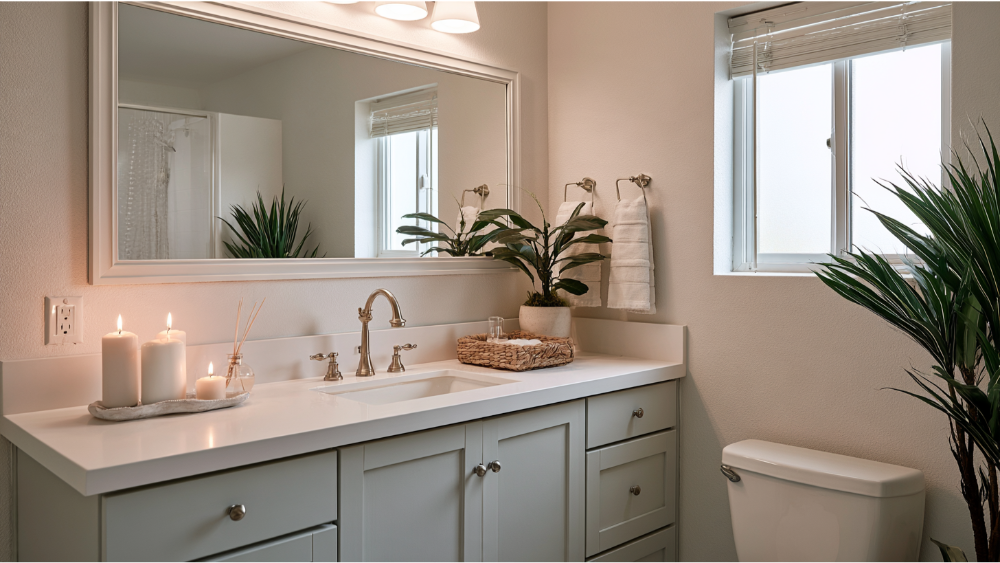
Once you know the room’s condition, you can pick a tier honestly instead of guessing. A guest bathroom that gets light use often fits comfortably in tier one. A primary bathroom with a daily shower usually belongs in tier two.
| Tier | What changes | What stays | Best when |
|---|---|---|---|
| Cosmetic refresh | Paint, lighting, mirror, hardware, shelving, sometimes flooring | Layout, plumbing, tub, shower, tile, vanity box | The room is sound but dated |
| Targeted renovation | Shower or tub surround, vanity and countertop, flooring, exhaust fan | Layout, plumbing locations, walls, door | Finishes are worn or the wet area needs rebuilding |
| Complete remodel | Full demolition, possible fixture or layout relocation | Little to nothing | Real damage, poor function, or accessibility needs |
Cosmetic Refresh
Paint, new hardware, a better mirror, upgraded light fixtures, smarter storage, and possibly new flooring. Nothing happens behind the walls. This is the right call when the bathroom is structurally fine and dry but looks builder grade and tired, and you want the room to feel personal again.
Targeted Partial Renovation
The most common budget-conscious path. The shower or tub surround gets rebuilt properly with correct waterproofing, the vanity and countertop are replaced, new flooring goes down, and a proper exhaust fan goes in. The layout and plumbing locations don’t move, which keeps the scope contained.
Complete Remodel
Full demolition, and sometimes relocated fixtures or a reworked layout. This is justified when there’s genuine moisture damage, when the bathroom’s functionality simply fails the people using it, or when accessibility has become a real need. Choosing this tier isn’t a failure of budgeting. It’s an accurate reading of the room.
Why Keeping Your Existing Layout Is the Biggest Budget Lever
Moving a toilet or shower three feet sounds simple. It isn’t. You’re touching supply lines, drain lines, vent piping, and usually floor framing, plus every finished surface behind and below the work. Leaving fixtures where they are is the single clearest way to save money on a remodel, which is why layout changes expand a project faster than any material choice.
The honest counterpoint: a layout change can absolutely be worth it when the room doesn’t function, when a door swing creates a hazard, or when accessibility matters now or soon. In the 2025 U.S. Houzz Bathroom Trends Study of 1,737 homeowners, 68% considered current or future special needs in their project. If your walls are already open, adding solid blocking for future grab bars costs very little then and considerably more later. Our article on whether you can remodel a bathroom without moving plumbing goes deeper on what’s possible in place.
Repair, Refinish, or Replace? A Condition-Based Guide
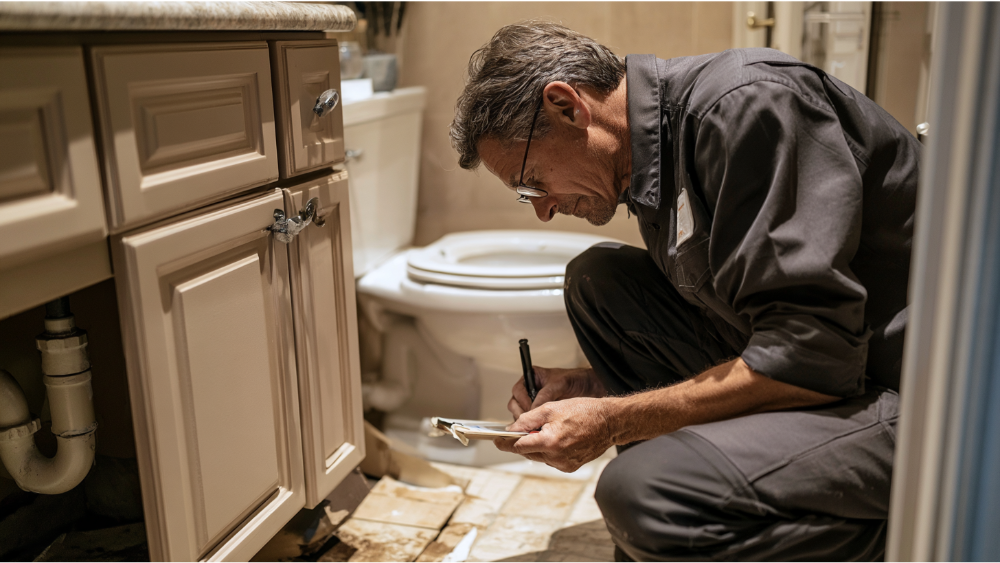
Condition decides this, not price. A sound component is worth keeping even in a generous budget, and a failing one is worth replacing even on a tight budget.
| Component | Keep and repair when | Refinish or reface when | Replace when |
|---|---|---|---|
| Vanity and cabinets | Box is solid, doors align | Finish is worn but structure is sound | Water-swollen, delaminating, or wrong size |
| Bathtub | Minor surface wear only | Sound tub, dry surround behind it | Movement, rot, or cracking |
| Shower surround tile | Tight, flat, well bonded | Rarely a good refinish candidate | Loose, hollow-sounding, or on a wet substrate |
| Grout and caulk | Grout is intact and bonded | Clean and whiten dingy but sound grout | Crumbling grout or recurring caulk failure |
| Countertop | No cracks or seam separation | Reface when the base cabinet stays | Damaged, stained, or sized for a new vanity |
| Toilet | Flushes well, stable, no leaks | Not applicable | Cracked, rocking, or an older high-volume model |
| Flooring | Flat, dry, firmly attached | Paint is a short-term refresh only | Soft subfloor, lifting, or water damage |
| Exhaust fan | Strong draw, vents outdoors | Not applicable | Weak, loud, missing, or venting into the attic |
Your Existing Bathroom Vanity and Cabinets
A solid cabinet box with tired doors is a strong refinishing candidate. New paint on the bathroom vanity, knobs swapped for one consistent finish, and a fresh top can read as a replacement for a fraction of the investment. A pedestal sink opens up visual floor space in a small bathroom but surrenders storage. A double vanity only works if your wall length and plumbing already support it. We fabricate countertops in our own shop, so custom sizes aren’t an obstacle.
Tile and Grout
Cleaning and whitening sound grout can make a shower look completely transformed, with nothing torn out, and a grout pen touches up stubborn lines at low cost. Re-caulking at changes of plane is maintenance, not remodeling. Replace tile when it’s loose, sounds hollow when you tap it, or sits on a substrate that’s been getting wet.
The Bathtub
Refinishing makes sense when the tub is structurally sound and the surround behind it is dry. Replace when there’s rot, movement, or a failing surround. Refinishing is a surface-level fix, and it won’t correct anything wrong inside the wall. The refinish-versus-replace decision deserves its own close look with a professional who’s seen the room.
Flooring
Luxury vinyl tile is waterproof, cost effective, and convincing in its imitation of hardwood or stone. Vinyl floors can sometimes go over an existing surface, but only when the subfloor is dry, flat, and firm. Floor paint on ceramic tile is a short-term refresh in a room that sees standing water, not a durable solution.
Where You Should Never Cut Corners
These items protect the house. They’re also the ones hidden behind finished surfaces, which is exactly why they get quietly skipped.
- Waterproofing and substrate. The 2024 International Plumbing Code model provisions require shower floors to be watertight, and the bonded sheet- and liquid-applied membranes it references must meet ANSI A118.10 and be installed per manufacturer instructions. Tile and grout are finishes, not waterproofing.
- Ventilation. EPA recommends that a bathroom exhaust fan vent directly outdoors, never into an attic or interior cavity, and advises adding a fan where none exists or the current one isn’t working. The 2024 IRC model standard lists 50 cfm intermittent or 20 cfm continuous, though local adoption and amendments vary. ENERGY STAR caps qualifying fans at 2.0 sones for units rated 10 to 200 cfm. A quieter fan simply gets used more, and that makes a big difference in a room that holds moisture.
- Valves, shutoffs, and drains. If the wall is open, this is the moment to address aging valves and questionable drain connections.
- Electrical. GFCI protection and correct wiring for lighting and outlets are safety items, full stop.
- Older homes. EPA’s Renovation, Repair and Painting Rule applies to paid work disturbing painted surfaces in most pre-1978 housing. The minor-repair exemption generally stops at 6 square feet of interior paint per room (20 square feet exterior) and doesn’t cover window replacement or demolition of painted surfaces. EPA updated its lead-safe guidance in March 2026.
- Permits where required. There’s no single national rule. Model codes only apply once a state or local authority adopts them, and jurisdictions amend them. Confirm your exact scope with your local building department before work begins.
Where to Simplify: Budget Friendly Bathroom Remodel Ideas
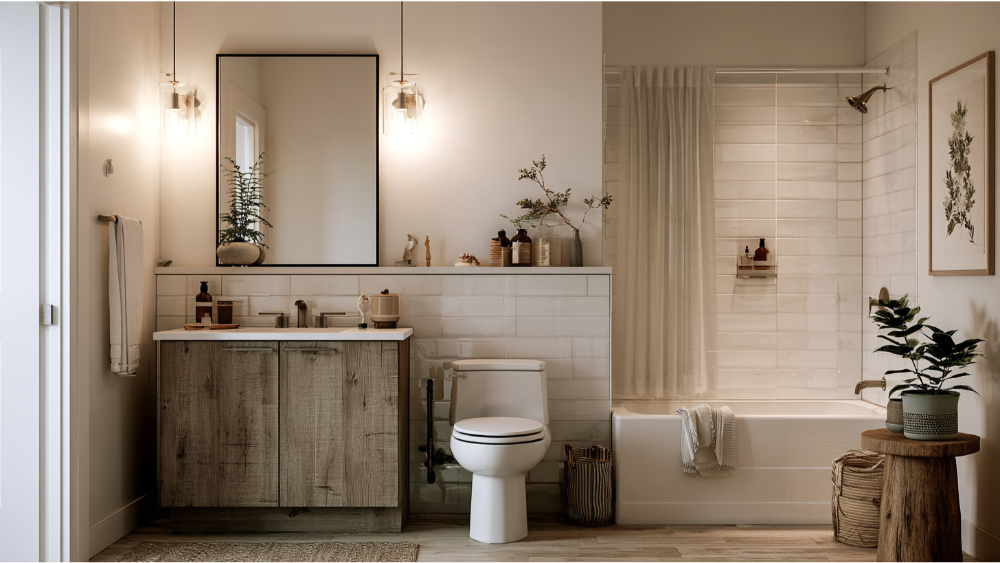
Choose one focal point and let everything else support it. Spreading the investment across four competing trends is how budgets get consumed without the room ever feeling finished. A small bathroom remodel especially rewards restraint. Here are a few ideas that earn their place.
Paint, Color, and Light
Fresh paint outside the wet zone is the highest-impact affordable upgrade in the room. Light colors make a small bathroom read larger and help the space feel calmer. A quality paint-and-primer-in-one saves a step without costing you coverage. New light fixtures change the mood of the whole room more than most people expect, and layered warm lighting is what delivers a spa-like feel without a spa-sized investment.
Hardware, Faucets, and Finishes
Swapping towel bars, the toilet paper holder, cabinet knobs, and drawer pulls for a single consistent finish like brushed nickel or matte black sets the bathroom’s style in an afternoon. Outdated fixtures age a room faster than tile ever will, and new fixtures with a contemporary feel make a huge difference for very little. One well-chosen faucet can carry the room as its standout feature. Spray paint on an existing faucet is a stopgap, and we’ll say that plainly. It won’t wear like a factory finish.
Mirrors, Floating Shelves, and Smart Storage
Frame the existing mirror, or hang a new mirror with real presence. A clean frameless mirror reads modern; a framed one adds warmth. A recessed medicine cabinet adds functional storage without taking floor space. Floating shelves and open shelving put vertical wall space to work, which matters most in small spaces, and woven baskets keep toiletries from colonizing the counter. This is usually where a small bathroom stops feeling cramped.
Peel and Stick, Textiles, and Selective Tile
Peel and stick tiles work as a backsplash or on a dry accent wall, applied over a clean, flat, sound surface, and they’re a budget friendly alternative to retiling an area that never gets wet. They don’t belong inside a shower. Folded hand towels, a new shower curtain, and simple window treatments finish the look for very little. Small details like these are what make a bathroom feel considered rather than merely updated. Use statement tile selectively, one niche or one floor, rather than wall to wall. Shopping clearance and discontinued lots is a legitimate strategy when you verify quantities upfront.
Choosing Fixtures That Lower Long-Term Water Use
Water efficiency is an operating-cost decision, not a guaranteed line-item saving. WaterSense-labeled toilets use 1.28 gallons per flush or less against the 1.6-gpf federal maximum. EPA notes that toilets account for nearly 30% of average indoor household water use and that replacing older inefficient toilets can save an average family close to 13,000 gallons a year.
WaterSense bathroom faucets use no more than 1.5 gpm at 60 psi versus the 2.2-gpm federal standard, and they’re tested to still deliver at least 0.8 gpm at 20 psi, so efficiency doesn’t gut performance. Labeled showerheads cap at 2.0 gpm against the 2.5-gpm standard, with EPA estimating up to 2,700 gallons saved per average family each year. Your actual savings depend on what you’re replacing and how your household uses water.
Which DIY Projects Make Sense, and Which Don’t
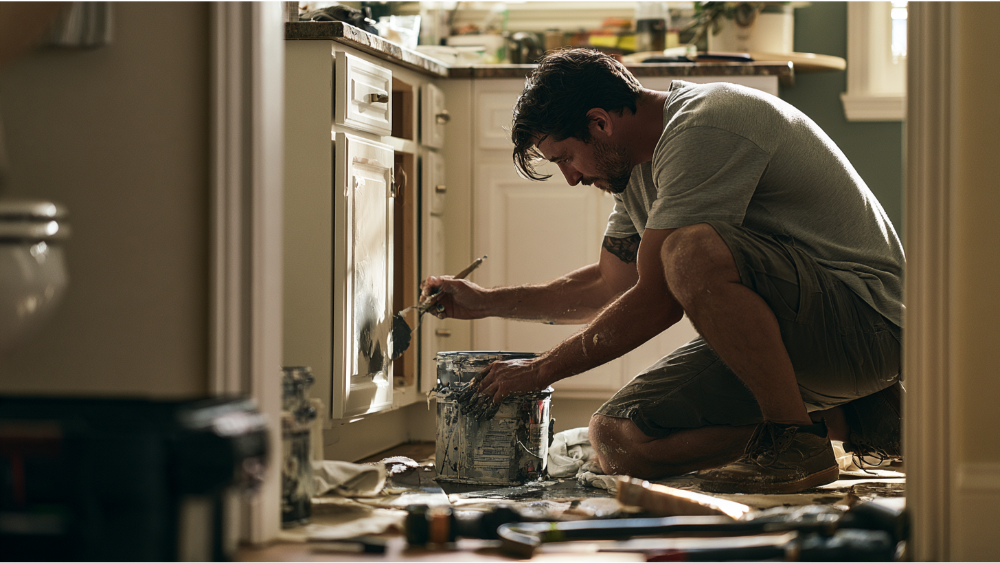
Generally approachable: painting, framing a mirror, swapping hardware and towel bars, installing shelving, adding baskets, hanging a new shower curtain, applying peel and stick accents in dry zones.
Condition-dependent: painting a vanity, replacing a faucet or light fixture, laying LVT over an existing floor. All reasonable until you find a seized shutoff, hidden water damage, or ungrounded wiring behind the plate.
Professional: wet-area waterproofing, shower pans and drains, valve work, electrical, structural changes, anything disturbing pre-1978 painted surfaces, and any scope requiring a permit or inspection.
A DIY approach can save costs on the simple items where the risk is lowest, but trading labor costs for a compromised professional finish in the wet area is a poor exchange. Most homeowners land in the same place. In that 2025 Houzz study of 1,737 homeowners, 84% hired professionals for their bathroom renovation, with general contractors the most frequently hired category. And NAHB’s 2025 remodeler survey found 73% rated bathroom remodeling common or very common. You’re in good company. Our guide on what you can and shouldn’t do yourself breaks these lines down further.
How to Prevent Scope Creep on the Way to Your Dream Bathroom
Most “overages” are really undecided decisions and undiscovered conditions. Both are manageable with an upfront, transparent scope and a realistic budget set before demolition. The FTC’s guidance for homeowners is a solid starting point:
- Get written estimates that describe the work, materials, completion date, and price.
- Verify licensing and insurance.
- Put every verbal promise and the full scope into the written contract.
- Don’t pay the entire amount upfront. Some states limit down payments, so check with your state or local consumer agency.
- Hold final payment until the work is complete and you’re satisfied.
We’d add three of our own. Finalize every material selection before demolition begins, not during. Agree in writing on who pulls permits. And settle the change-order process before you need it, so a surprise behind the wall becomes a conversation instead of a conflict. Keep a reserve set aside for conditions nobody could see.
Your Before-Demolition Checklist
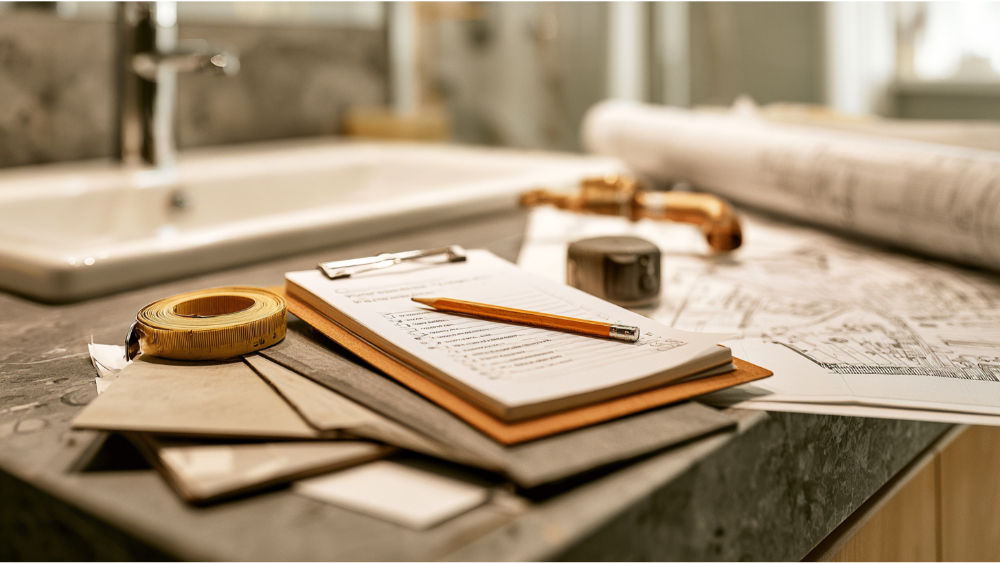
- Layout confirmed, including any fixture relocation
- Existing damage evaluated, not assumed
- Scope tier chosen and written down
- All materials selected and confirmed in stock
- Permit responsibility assigned by name
- Pre-1978 lead-safe requirements checked
- Waterproofing and ventilation explicitly included in the scope
- Written scope, payment schedule, and change-order process signed
When these are settled, demolition day is the easy part, and your new bathroom starts from solid ground.
How Capital Construction Approaches Your Dream Bathroom on a Budget
We start with upfront timelines and costs, because a remodel should never feel like a mystery unfolding in your own home. Our craftsmen are in-house. We don’t outsource your project to third parties, which means the people in your bathroom are accountable to us and to you.
Our Sacramento showroom lets you see and hold materials before anything gets ordered, and our own countertop fabrication shop handles custom work without sending your project across town, whether it’s a bathroom or a kitchen renovation. With 20+ years of experience and 700+ happy clients by our own count, and CA Contractor License #793440 behind the work, we’ve built this around your vision rather than ours.
We’re proudly rooted in Sacramento and treat clients like neighbors, because most of them are. If you’re weighing scope and wondering what the perfect transformation looks like for your room, schedule a FREE* No-Obligation Estimate. Call (916) 277-8282 or email design@capitalconstruction.com, and we’ll look at the real condition of your bathroom before anyone talks numbers.
Frequently Asked Questions
What is the least expensive way to remodel a bathroom?
Keep the existing layout, refinish or repair whatever’s still sound, and concentrate the visible change in paint, lighting, hardware, the mirror, and storage. Fix any moisture or ventilation problem first, because every dollar spent on finishes over a wet substrate is a dollar you’ll spend twice.
What does a “$3,000 bathroom package” usually include, and can I remodel a bathroom for $5,000?
There’s no national standard package behind those numbers. Advertised figures rarely account for your room’s existing condition, local requirements, or material availability. What actually determines scope is the condition of the wet area, whether plumbing moves, and which components you keep. A free, no-obligation estimate based on the real room is the only honest answer.
Can I remodel a bathroom without moving the plumbing?
Yes, and for most budget-conscious projects it’s the right call. You can replace the vanity, countertop, toilet, tub or shower, flooring, lighting, and fan while the plumbing fixtures stay in their current locations. Our dedicated article covers the details.
Do I need a permit for a bathroom remodel?
It depends on your scope and what your jurisdiction has adopted. Purely decorative work is often treated differently from changes to plumbing, wiring, ventilation, structure, walls, or openings. Confirm your exact scope with your local building department before work begins, and never assume.
Can peel and stick tiles be used in a bathroom?
Yes, in dry zones. Backsplashes and accent walls work well when the surface underneath is clean, flat, and sound. They are not a substitute for a properly waterproofed shower or tub surround, and they shouldn’t be used inside one.