While homeowners can safely DIY cosmetic bathroom updates like painting and hardware swaps, critical behind-the-wall tasks, such as plumbing, electrical work, and shower waterproofing, should be left to licensed professionals to prevent catastrophic water damage and ensure strict compliance with 2026 California building standards.
Here’s the honest answer to the question of a DIY bathroom remodel and what you can and shouldn’t do yourself: you can handle the cosmetic and finish parts of a bathroom renovation, but the work behind the walls and under the tile is best left to licensed pros. Planning, painting, swapping hardware, hanging accessories, and simple fixture updates are all fair game if you have the patience. Plumbing, electrical, waterproofing, structural changes, and anything involving hazardous older materials are a different story. We get it, you want to be hands-on and save where it makes sense. The trick is knowing the line between what you can see and what quietly protects your home.
A DIY bathroom remodeling job can run from a quick refresh to a full-scale renovation. A complete remodel usually pulls in five to seven trades working together, which is why it isn’t a casual weekend project. Read on before you pick up a pry bar, because a little planning up front will help you avoid the costly surprises that hit most first-timers.
Why a Bathroom Renovation Is Different From Other DIY Projects
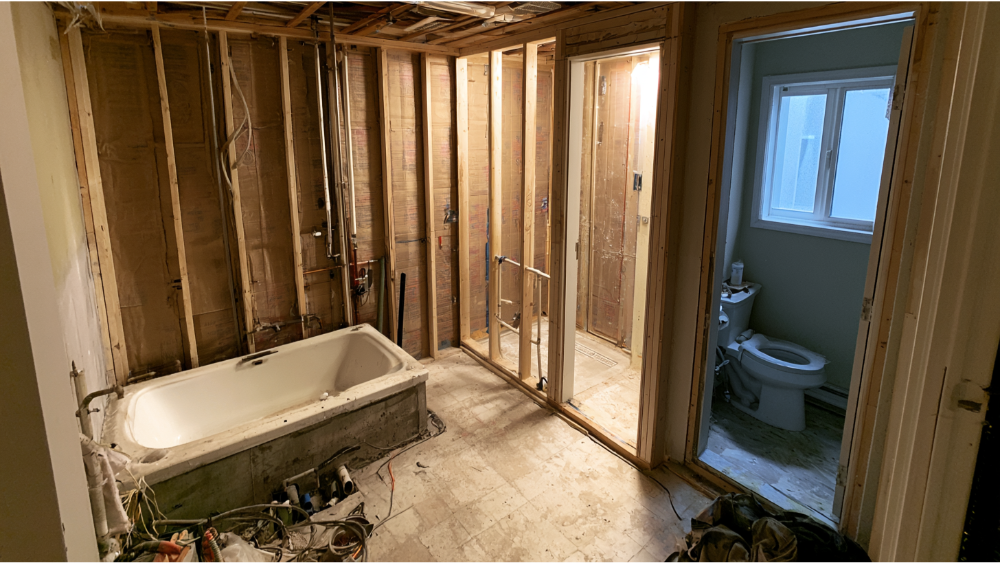
A bathroom is a small room where water, electricity, ventilation, framing, and hidden materials all meet in a few square feet. That concentration is what makes it unforgiving. One quiet leak can waste close to 10,000 gallons a year and rot framing before you ever notice a stain. Improper waterproofing can lead to serious water damage, and skipping it altogether can hide silent leaks for years. A faint musty smell is often the first and only warning you get.
Here’s the part most people miss: tile and grout are not the waterproofing system. The membrane behind them is. Grout is porous, so the barrier under your beautiful tile is what actually keeps water out of the structure. Proper ventilation matters just as much, because moisture with nowhere to go turns into mold. And a finish that looks amateur can hurt resale instead of helping it. None of this is meant to scare you off. It’s the reason the green, yellow, and red tiers below exist. Think of them as the road map that helps you avoid the mistakes we see most.
Your DIY Traffic-Light Guide at a Glance
Before we break each tier down, here’s a quick reference you can scan in seconds. Green means most homeowners can handle it, yellow means proceed only with real skill and a permit check, and red means call a licensed pro.
| Tier | What It Covers | Example Tasks |
|---|---|---|
| Green Light | Cosmetic and finish work many homeowners can tackle | Planning and design, painting outside wet areas, installing accessories, swapping cabinet hardware, light demolition, selecting finishes |
| Yellow Light | Doable with honest self-assessment and a permit check first | Replacing a toilet in place, setting a vanity without moving plumbing, flooring over a suitable substrate, floor tile, drywall repair outside wet zones |
| Red Light | Safety, code, and structural weight; leave to a professional | Moving plumbing or electrical, shower waterproofing, tub-to-shower conversions, structural changes, mold remediation over ~10 sq ft, lead or asbestos disturbance |
Green Light: Bathroom Tasks Many Homeowners Can Tackle
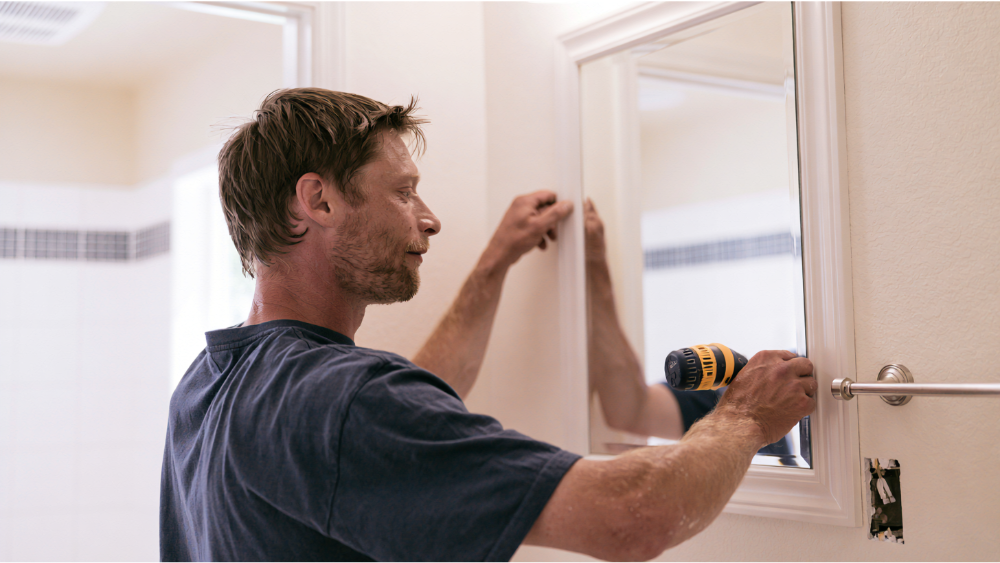
Plenty of a remodel is genuinely DIY-friendly, and this is where your involvement in the design really shows. Planning ahead here also minimizes costly errors and makes sure your materials are actually available when you need them.
- Building inspiration boards and planning your design
- Measuring and photographing the existing space
- Clearing the room before work begins
- Painting outside wet areas (use a moisture-resistant paint)
- Installing accessories like towel bars, hooks, shelves, and mirrors
- Swapping out cabinet hardware
- Light demolition of old fixtures and flooring
- Minor caulk touch-ups where there’s no deeper water damage
- Selecting tile, countertop, cabinet, and fixture styles
If you’re fairly handy, removing an old fixture or setting a pre-built vanity is manageable when the plumbing lines up. Keeping your existing plumbing layout unchanged is one of the smartest moves you can make, since it saves real time and money. Choosing finishes and shaping the look is meaningful participation, not busywork, and it’s a nice way to feel ownership over the result before any pro sets foot in the room.
Yellow Light: DIY Only If You Have the Skill (and Check Permits First)
These tasks are doable, but only with honest self-assessment and a permit check first. Always shut off water and electricity before any demolition, and never start demo without a finished plan. Tearing into a wall with no clear scope is one of the most common ways a project goes sideways.
- Replacing a toilet in the same location
- Swapping a faucet or setting a vanity without moving plumbing
- Installing flooring over a suitable substrate
- Setting a new sink where the supply and drain already line up
- Floor tile, but not shower waterproofing unless you’re trained
- Drywall repair outside wet zones
- Surface-mounted fixture swaps, if local rules and electrical safety allow
Tiling shower walls and floors takes careful alignment and correct waterproofing underneath, which is why floor tile lands here and shower tile does not. One rule to keep: if you’re unsure whether a task touches wiring, plumbing, ventilation, or waterproofing, pause before proceeding. When in doubt, that’s exactly the kind of question worth asking a licensed pro before the job gets away from you.
Red Light: Shower, Toilet, and Hidden System Work You Shouldn’t DIY
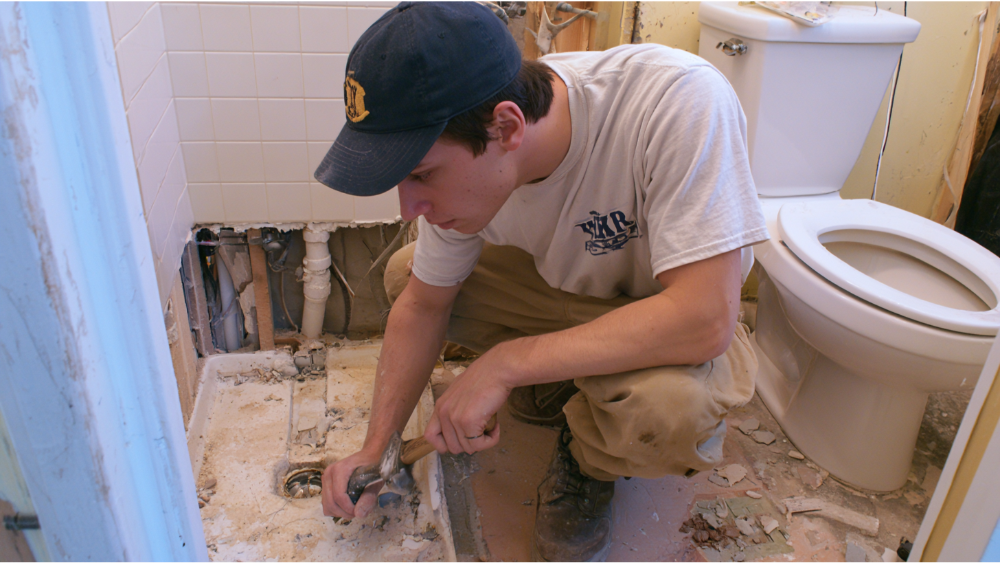
Some work belongs with a professional, full stop. These are the parts that carry safety, code, and structural weight.
- Moving plumbing supply, drain, waste, or vent lines, which is work for a licensed plumber
- Adding or moving electrical circuits, outlets, lighting, heated floors, or fan wiring
- Shower waterproofing and shower pan work
- Tub-to-shower conversions
- Relocating a toilet or its drain to a new spot
- Structural changes to walls, windows, or doors
- Exhaust fan installation or rerouting that involves wiring or ducting
- Mold remediation over EPA’s roughly 10 square foot guidance, or after major water damage
- Disturbing lead paint in pre-1978 homes
- Suspect asbestos flooring, adhesive, or insulation
- Anything needing permits or inspections you can’t confidently complete to code
The Electrical Safety Foundation International recommends hiring a licensed electrician for home electrical work, and that guidance fits bathrooms especially well. Live wires behind a wall are not the place to learn. For older homes, the EPA advises treating suspect materials as asbestos and leaving them alone: don’t saw, sand, or scrape. In pre-1978 homes, assume paint is lead-based until testing says otherwise. Stop demo immediately if you hit a musty smell, soft or swelling flooring, dark staining, or unknown older materials. The hard lesson many first-timers learn is that one shortcut here can undo an entire project.
Sacramento & California Permit Rules Homeowners Should Know
If you own a home in Sacramento or elsewhere in California, permits and code aren’t optional background noise. The City of Sacramento issues a Minor Bathroom Remodel Permit for in-kind replacement of fixtures and finishes without plans, but “no plans required” still means a permit is required. Remodels with structural alteration need plan review. Your work should meet the 2025 California Building Standards Code, which took effect January 1, 2026.
A few facts from the California Contractors State License Board worth knowing:
- Anyone you hire for contracted work at $1,000 or more in combined labor and materials, or work requiring a permit, must hold a valid CSLB license. Ask any contractor to confirm their license before work starts.
- Signing your own permit as an owner-builder increases your responsibility. You must pass inspections, and using unlicensed help can make you an employer with tax and insurance obligations.
- A written contract is required for home improvement work over $500, and the down payment is capped at $1,000 or 10% of the contract price, whichever is less.
On the planning side, a 10 to 20% contingency fund is smart advice, and many homeowners keep renovation spending within a sensible share of their home’s value rather than overbuilding for the neighborhood. It’s easy to underestimate the dollars a hidden repair can add, so build in room for the unexpected.
The Smart Hybrid Approach: DIY the Personal Touches, Trust Pros With the Hidden Systems

You don’t have to choose between doing everything or doing nothing. The approach that works best combines both: you stay deeply involved in the vision, choosing finishes, gathering inspiration, painting, and adding personal touches, while a trusted team handles what protects your home. Keeping the plumbing layout in place, where your design allows, stretches your budget further too. Most homeowners we talk to agree that this split gives them the best of both worlds. If a task makes you feel faint at the thought of the risk, that’s a clear point to hand it off, and it’s worth talking it through with a spouse before committing.
That’s where we come in. Capital Construction is family-owned and proudly rooted in Sacramento, and we treat your remodeling project like it’s happening in a neighbor’s home, because often it is. Whether it’s a bathroom or a full kitchen, our in-house team does the work with no third-party outsourcing, so accountability stays in one place. We acknowledge that inviting people into your home is a big deal, and we take that trust seriously as part of this community. You can select materials hands-on in our showroom, and our countertop fabrication shop lets us build personalized pieces for your space. We keep communication clear with upfront timelines and costs. Your vision, our work.
If you’re not sure whether your project is cosmetic or code-triggering, or you’d rather not manage a rotating cast of unknown workers, reach out. Schedule a Free* No-Obligation Estimate and get expert advice. Call (916) 277-8282, email design@capitalconstruction.com, or request a quote online. CA Contractor License #793440.
Frequently Asked Questions
Can you do a bathroom remodel yourself?
Yes, for cosmetic and finish work like painting, hardware, accessories, and simple fixture swaps that keep the plumbing in place. You should hire licensed pros for plumbing, electrical, waterproofing, structural changes, and anything that triggers a permit or inspection you can’t confidently complete to code.
What are common DIY bathroom remodel mistakes?
The big ones are starting demo without a finished plan, skipping proper waterproofing behind tile, poor ventilation that invites mold, moving plumbing or wires without a permit, and underestimating the budget. Unforeseen issues almost always add cost, so plan carefully to avoid problems before you swing a hammer.
What is the 30% rule in remodeling?
It’s a general guideline that renovation spending shouldn’t exceed roughly 30% of your home’s value across all projects. For a single bathroom, many experts suggest keeping the investment within a modest share of home value so you don’t overbuild for the neighborhood.
What should I do if I find mold, lead paint, or asbestos?
Stop work. For mold covering more than about 10 square feet or following major water damage, follow EPA guidance and consider a professional. Treat suspect asbestos materials as hazardous and leave them undisturbed, and in pre-1978 homes assume paint contains lead until testing proves otherwise.
Where can I see examples of your work?
Our gallery on our website shows completed bathroom and kitchen projects across the Sacramento area, and our social pages, including YouTube, are a good place to watch project video updates rather than waiting or sitting on the fence. Any user can follow and subscribe to see new transformations, join the conversation, and leave a comment if a finished space sparks an idea for your own home. Our president and family team read what neighbors have to say, and we think you’ll find it a genuinely helpful, finicky-detail-and-all look at how we work.