Key Takeaway
A budget kitchen remodel gets a high-end look by keeping the existing layout and spending on visible surfaces: cabinet fronts, one statement countertop, layered lighting, and quality hardware. In Sacramento, cosmetic and partial remodels deliver the biggest visual return without the cost of moving plumbing or walls. A disciplined plan consistently outperforms a larger, unfocused one.
A budget kitchen remodel earns a high-end look by keeping the existing footprint and putting your money where it shows: the surfaces and details you see and touch every day. Fresh cabinet fronts, a hero countertop, layered lighting, and quality finishing work do more for the feel of a kitchen than moving walls or gutting the whole space. Here’s the reassuring part: a kitchen on a budget doesn’t mean cutting corners. It means being deliberate about what deserves the spend. This is for homeowners planning a kitchen refresh who want an elevated result without a full luxury tear-out. As a family-owned Sacramento remodeler, we’ve watched a smart, disciplined plan beat a bigger, unfocused one more times than we can count.
A budget kitchen remodel doesn’t mean a cheap kitchen
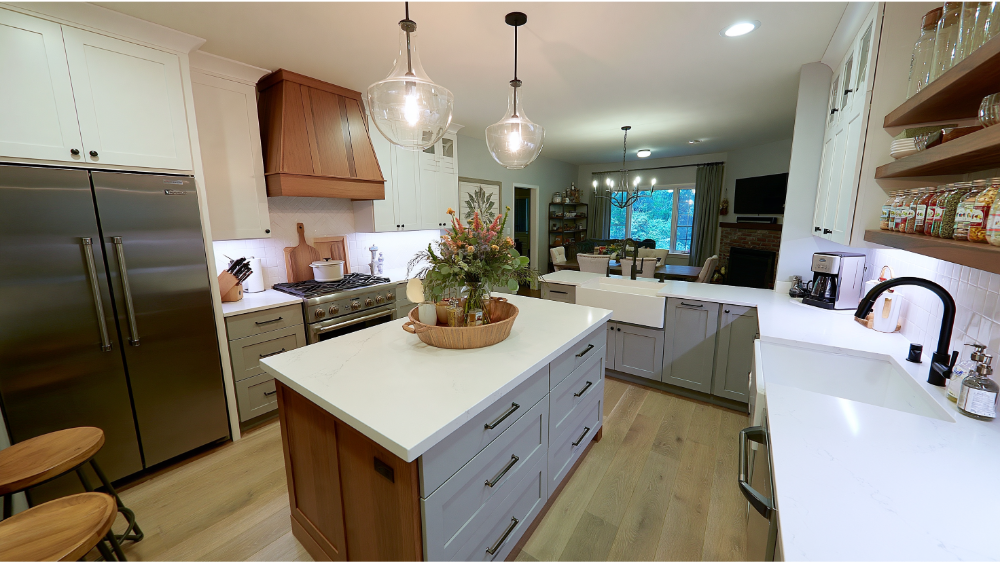
The whole idea rests on one word: prioritization. Spending strategically on visible, touchable areas will always look better than spreading a small budget thin across everything. Quality fixtures, paint, and finishes carry more visual weight than expensive structural changes nobody notices. And mixing modest materials with a few high end touches is exactly how a designer feel gets built. The result can look amazing without draining your savings.
It helps to know which scope you’re actually in. A cosmetic refresh keeps the kitchen layout and cabinets, updating paint, hardware, lighting, and surfaces. A partial remodel replaces cabinets or countertops while leaving plumbing and electrical roughly in place. A full kitchen remodel reworks the kitchen layout, utilities, and structure. Most homeowners chasing a high end look for less belong in the first two.
| Scope | What it covers | Best for |
|---|---|---|
| Cosmetic refresh | Keeps the layout and cabinets; updates paint, hardware, lighting, and surfaces | The high-end look for the least spend |
| Partial remodel | Replaces cabinets or countertops; leaves plumbing and electrical roughly in place | A bigger change while protecting budget |
| Full remodel | Reworks the kitchen layout, utilities, and structure | Kitchens whose current layout genuinely fails daily life |
Too many kitchen renovations go sideways because costs and timelines stay fuzzy until the invoices arrive. We’d rather tell you upfront what each choice really costs you, so the plan matches your budget instead of fighting it.
Protect your budget by keeping the kitchen layout you already have
The single biggest budget lever is the one people overlook: leave the kitchen layout alone. Every time you move plumbing, gas, electrical, or an appliance, you add labor, add materials, and often trigger permits. A sink relocated three feet across the room can cost more than a beautiful new countertop. Sliding a fridge to a new wall means new outlets and often new framing, and that money rarely shows in the finished space.
Keep the existing footprint when it works. Expanding the kitchen or shuffling the walls is rarely the budget-smart move, and industry data backs the instinct toward restraint. Changing the layout is worth it only when the current one genuinely fails your daily life: a cramped work triangle, no counter space beside the range, a walkway that fights the dishwasher door.
There’s a local wrinkle worth flagging here. In Sacramento, a like-for-like kitchen remodel without structural alteration is generally handled as a minor permit, while moving walls or making structural changes pushes you into full plan review. That difference alone can reshape a budget. We’ll walk your space and tell you honestly which changes earn their cost and which ones just drain it.
Save the old cabinets if the bones are in good condition
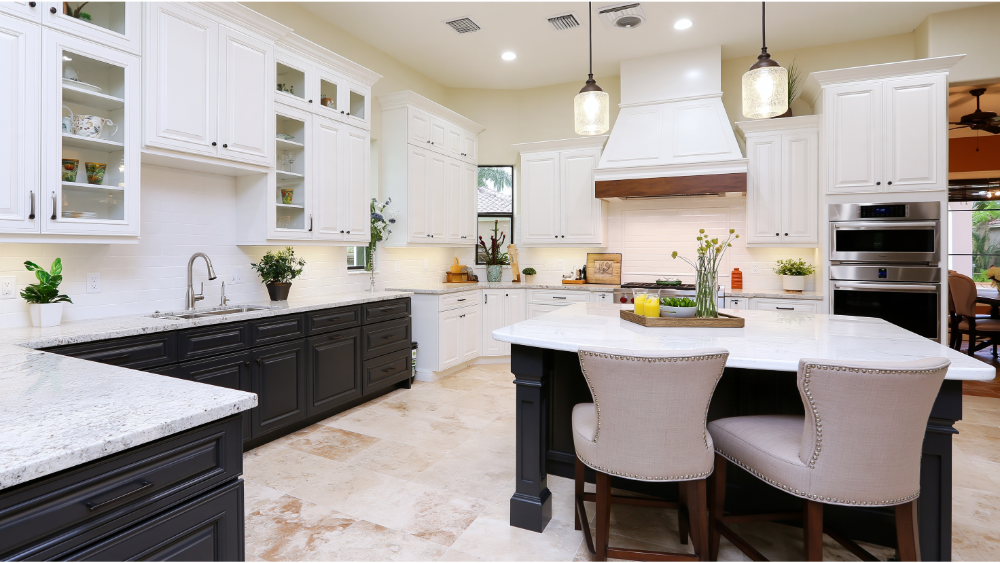
Cabinets define the room, and they’re often the most expensive line item. Before you replace them, work down the ladder from least to most invasive. Houzz’s 2026 study found cabinets were upgraded in 84% of renovations, but “upgraded” rarely means torn out.
- Paint or refinish solid boxes. Good prep is what separates a painted cabinet that looks custom from one that looks cheap. A fresh new color on the doors can make a big difference. Sanding, priming, and clean spray finishing matter more than the paint itself.
- Reface by putting new doors and drawer fronts on existing ones. It’s a budget friendly way to change the whole look without buying all-new cabinets.
- Fix tired hinges and add soft-close hardware to restore function and feel.
- Swap a few doors for glass-front inserts to create a focal point.
- Extend cabinets to the ceiling with crown molding and trim for that built-in, custom appearance.
Statement hardware is the cheapest high-impact move in the room. New pulls and knobs change the personality of a kitchen for a fraction of a rebuild. When budget cabinets are the right call, MDF and plywood are solid, common choices, and ready-to-assemble (RTA) options trim shipping and labor since you assemble them on site. If your old cabinets are in good condition, keeping them is almost always the smarter path.
Open shelving as a budget friendly focal point
A short run of open shelving in place of a couple of upper cabinets is another budget friendly idea that opens up wall space and shows off your everyday dishes and decor. Full replacement is only truly necessary when the boxes are failing: water damage, delamination, or frames that no longer hold square. If the bones are good, keep them.
Choose one statement surface: countertops and backsplash
You don’t need every surface to be premium. Pick one hero and let it carry the room. Countertops were upgraded in 91% of renovations and backsplashes in 85%, per Houzz, and pairing the two is where the luxury moment usually lives.
Engineered quartz remains the most-chosen countertop material at 32%, prized for its consistency and low maintenance. A clean, uncluttered counter is a hallmark of high end kitchens, so a good quality material that stays looking calm and tidy does real work for you. Butcher block countertops are another way to add warmth for less, and a single butcher block section on an island or prep zone reads as intentional and custom. For the backsplash, classic tile patterns and neat grout lines read as expensive; sealed grout also stays cleaner and holds its color, which keeps the whole wall looking fresh. Even a lower-cost peel-and-stick tile can look sharp when it’s installed with care. Mixing an affordable field tile with one quality surface is the designer trick that creates a big impact.
Seeing materials together is what keeps the result matching the vision in your head. In our Sacramento showroom you can lay a countertop sample against the cabinet finish, the tile, and the flooring in real light, not on a screen. Our on-site countertop fabrication shop then cuts and finishes your stone in-house, so the piece that lands in your kitchen is the one you approved.
Layer your lighting to make everything look intentional
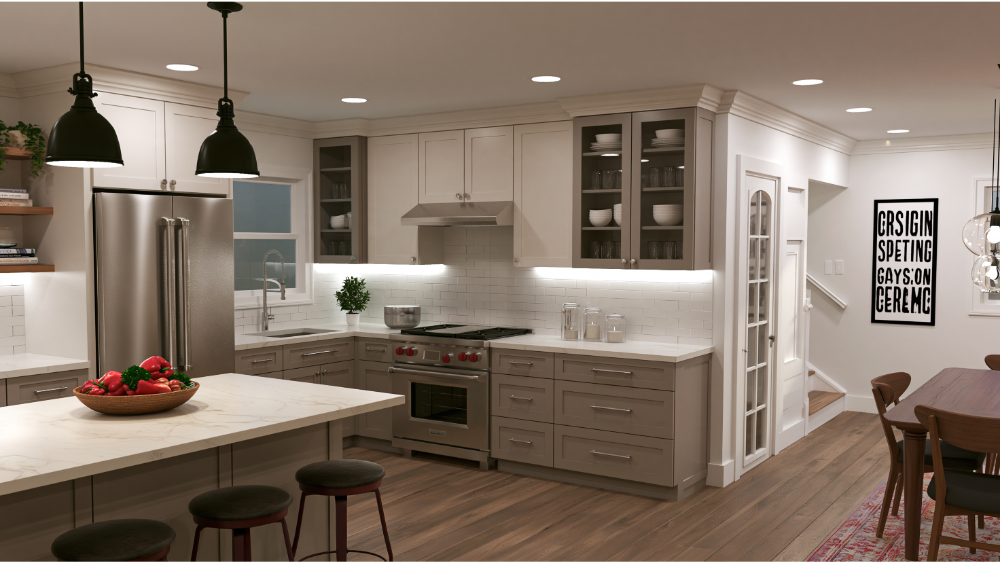
Lighting is one of the highest-impact, most budget friendly upgrades in the whole project, and it’s the one people underspend on most. Good lighting makes modest materials look deliberate; harsh, flat lighting makes expensive ones look ordinary. New lighting can often be handled well under $5,000.
Think in three layers. Ambient light fills the room, usually from recessed cans. Task light lands on your work surfaces, and under-cabinet LED strips are cost-effective and transformative here (NKBA found under-cabinet lighting cited by 82% of respondents). Accent light adds depth, like interior cabinet glow or a fixture over glass fronts. Layering the three reduces harsh shadows and gives the kitchen dimension.
Pendant lights over a kitchen island or peninsula bring an immediate high end feel, and Houzz found 95% of homeowners upgrading an island add lighting above it. If you have room for one, a kitchen island earns its keep as prep space, casual seating, and a spot to gather, and the island becomes the natural anchor of the room. In a small kitchen, a slim peninsula can play the same role where a full island won’t fit. Swapping a dated flush-mount for a quality fixture is a small change with an outsized payoff. Add dimmers for flexibility. One California note: fixtures installed in a kitchen must meet the state’s high-efficacy lighting requirement, which shapes which products qualify.
Upgrade the touchpoints and finishes you use every day
The details your hands touch shape how the whole kitchen feels. A weighty faucet, a deep quiet sink, soft-close hardware, and a few drawer organizers change your daily experience far more than their cost suggests. Faucets were upgraded in 82% of renovations and sinks in 85%.
Cohesion is the quiet luxury signal. Keep your metal finishes consistent across the faucet, cabinet hardware, and lighting, and the room instantly reads designed. Clean lines, decluttered counters, and matching storage make the space feel calm and functional. Appliances matter too, but they don’t all have to be new. If your fridge, dishwasher, and stove still work and suit the look, keeping them is a smart way to save money, not a compromise. When you do replace appliances, a matching finish and a counter-depth fridge that sits flush with the cabinets go a long way toward a built-in, high end look. Where the kitchen opens to a dining area or dining room, keeping those finishes consistent makes the whole floor feel connected.
Flooring ties it together. Choose something durable and water-resistant in a warm neutral tone that won’t date, since neutrals dominate current design direction. Continuous flooring that flows into adjacent rooms makes the whole space feel larger and more considered. Skip the trend-chasing gray if you want a stylish look that still feels right in ten years.
Where to save vs. where to spend (and what not to do)
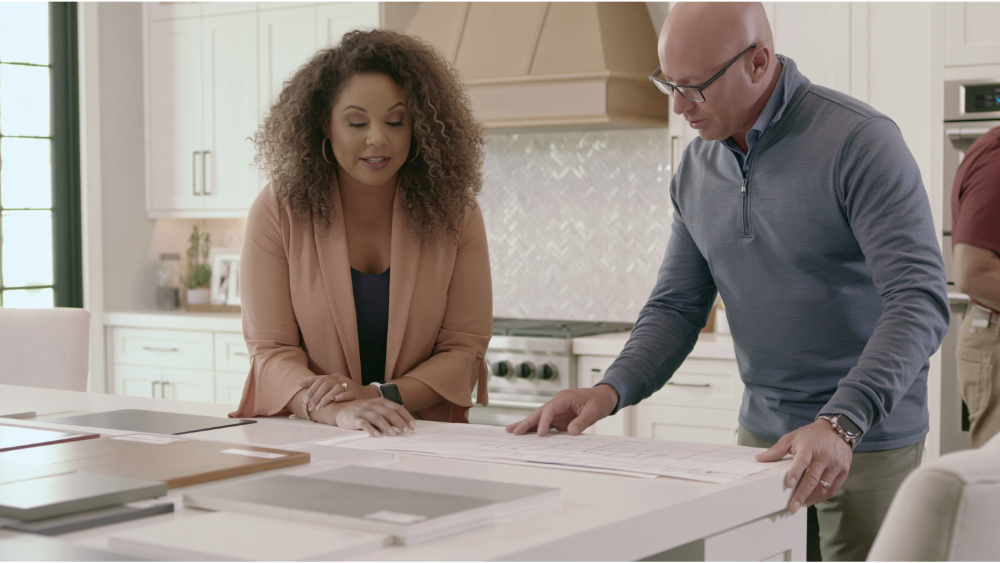
Here’s the framework in one glance. Spend where the eye and hand notice quality; save where they don’t. These are the tips that keep a small budget working hard and help you invest your money where it counts.
| Save on | Spend on |
|---|---|
| Keeping the existing kitchen layout | Installation and craftsmanship quality |
| Solid cabinet boxes (refinish, don’t replace) | One hero countertop |
| Neutral paint and selective open shelving | Layered lighting |
| Functional appliances you already own | Faucet and sink |
| Hardware refresh over full replacement | Tile setting, grout, and any needed electrical or plumbing |
And a short list of what to avoid:
- Don’t move walls or utilities casually. It’s the fastest way to break a budget.
- Don’t DIY electrical, gas, or plumbing. Those belong with licensed pros.
- Don’t skip permits, and don’t ignore lead-safe rules in older homes.
- Don’t buy materials from big box stores without seeing them together in the same light.
- Don’t pile on every trend at once.
The thread running through all of it: poor prep and rushed installation make even good materials look cheap. Flawless finishing, from crisp tile lines to clean grout joints, is what separates a budget remodel that looks high end from one that just looks budget. Done right, a modest spend can create your dream kitchen and give the room a genuinely fresh look you’ll love to cook in.
Planning your remodel in Sacramento: permits, contracts, and protections
A few California facts take the fear out of the process. The City of Sacramento treats like-for-like kitchen remodels without structural alteration as minor permits, while structural changes require plan review, along with the Residential Interior Remodel Questionnaire (CDD-0162). Permits are required for remodeling and for electrical, mechanical, and plumbing work, and starting before the permit is issued can trigger penalty fees. When in doubt, check with your local building department.
On the contractor side, the California Contractors State License Board (CSLB) gives you real protection. A written contract is required for any home improvement project over $500. Your down payment is capped at $1,000 or 10% of the contract price, whichever is less. Change orders must be in writing, and the license number belongs on the contract. When a job combines plumbing, electrical, and carpentry under one agreement, a licensed “B” General Building contractor is the right fit; ours is CA License #793440.
One more for established Sacramento neighborhoods: the EPA’s lead-safe (RRP) rule applies to paid work in pre-1978 homes that disturbs painted surfaces, which is common in older housing stock.
How Capital Construction helps you get the high-end look for less
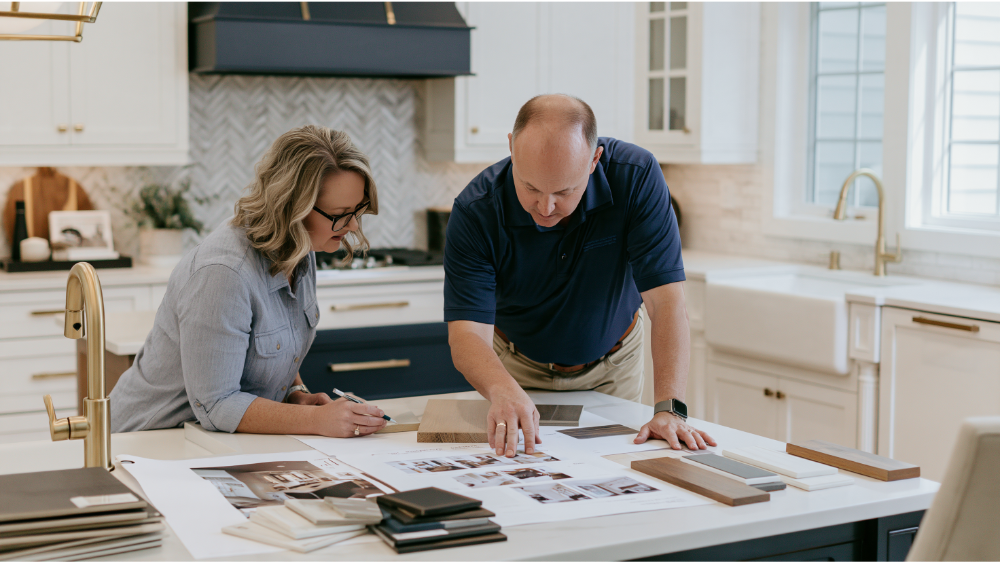
Everything above works best with a partner who keeps the plan honest. We’re family-owned and proudly rooted in Sacramento, and we treat you like neighbors, not just clients. Our team is in-house, so we don’t outsource your project to third parties; the people planning your kitchen are the ones building it, which means direct accountability. Our expansive showroom lets you see countertops, cabinets, tile, flooring, and hardware together so the finished result matches your vision, and our on-site countertop fabrication shop handles custom stonework start to finish. We give you upfront timelines and costs from the first conversation, and we back 20+ years of experience and 700+ happy clients (as reported on our own site) with CA Contractor License #793440.
If you’re ready to turn ideas into a plan, we’d love to help. Schedule a FREE Estimate and get a Free* No-Obligation Quote and expert advice with no pressure. Call us at (916) 277-8282 or email design@capitalconstruction.com.
Frequently Asked Questions
What is the best way to make a kitchen look expensive on a budget?
Concentrate spend on what you see and touch: cabinet fronts, a hero countertop, layered lighting, and quality hardware. Keep countertops clear and finishes consistent, and the space reads high end without a full gut.
Should I paint or replace my kitchen cabinets?
If the boxes are solid, paint, refinish, or reface them. That preserves budget and, done with proper prep, looks custom. Replace only when the boxes are failing from water damage or age.
What kitchen upgrades are worth splurging on?
Installation quality, one statement countertop, layered lighting, and your faucet and sink. These are the details you use daily and the ones that most affect how the kitchen feels.
Do I need a permit for a kitchen remodel in Sacramento?
Usually yes. Like-for-like remodels are typically handled as minor permits, and structural changes require plan review. Any electrical, plumbing, or mechanical work needs a permit, so confirm details with your local building department.