Choosing the right bathtub for a Sacramento bathroom remodel requires balancing household layout needs with structural realities, such as weight limits for cast iron and water heater capacity for deep soakers, while ensuring full compliance with 2026 California Plumbing Code requirements for anti-scald valves and waterproof surrounds.
The right bathtub for your bathroom remodel is the one that fits your existing space and plumbing, supports how your household actually bathes, and meets comfort, safety, and code requirements. Style matters, but it comes after layout and daily use. Pick the tub that works with your home first, then choose the look that brings your vision to life. If the number of bathtub options feels overwhelming right now, that’s normal. This is a meaningful investment in your bathroom, and getting it right starts with a few clear decisions.
Start With How You Actually Use the Bathroom
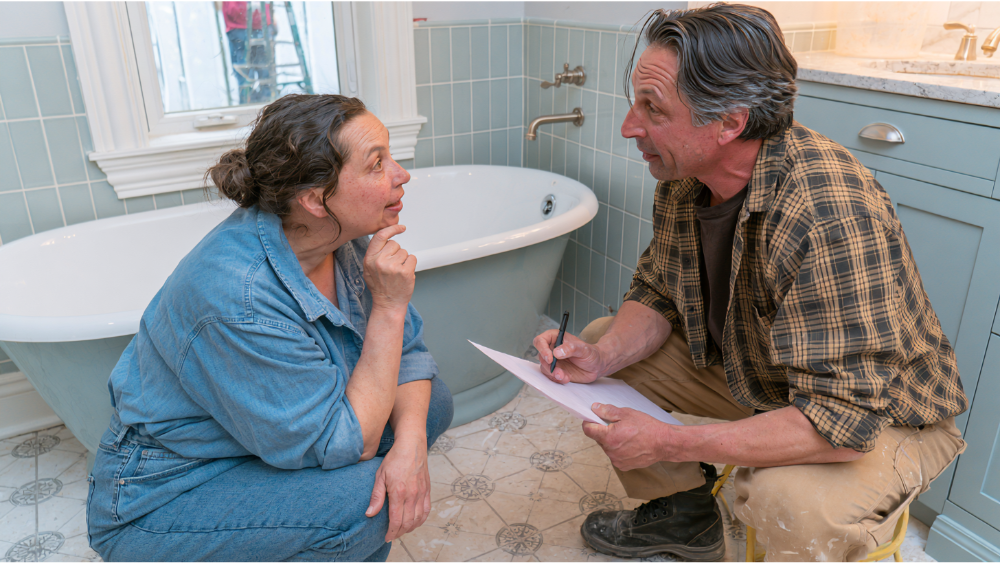
Before you fall for a photo, think about who uses this bathroom and how. Do you have young kids or pets who need an easy tub bath? An aging parent who values a low step-over on a walk in tub? Are your evenings about long soaks, or are mornings all quick showers? A primary suite can support a separate soaking bathtub and shower, while a hall or guest bathroom usually needs one hardworking fixture. Keeping at least one bathtub in the home is also worth considering for families with little ones and for resale down the road. Match the tub to your life, then narrow the style choices that fit your available space.
Freestanding, Alcove, Drop In, and Corner Bathtubs: Where Each One Fits
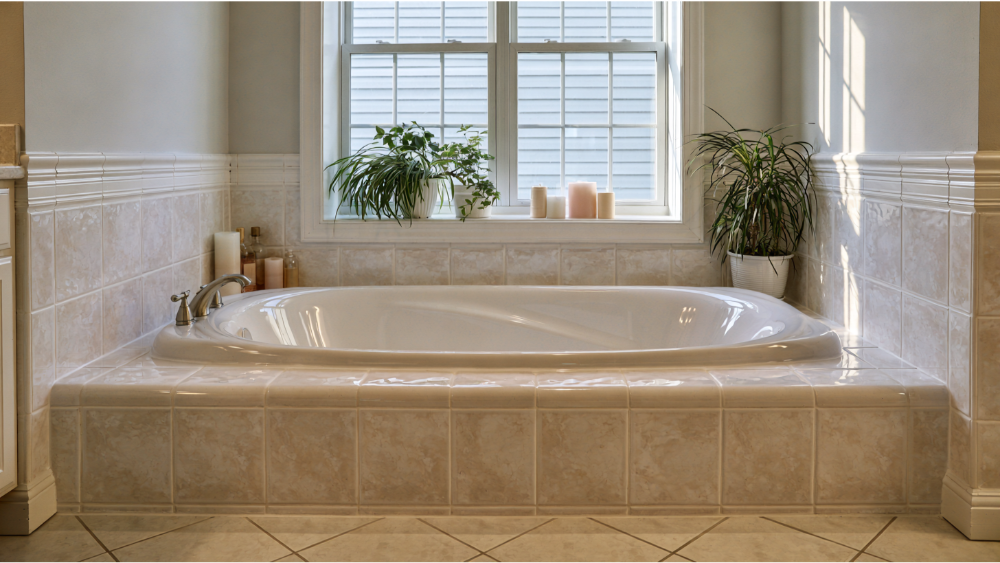
Each type solves a different layout problem. Alcove tubs are the most common in traditional bathrooms because they tuck neatly into a three-wall enclosure across three walls, which makes them the natural choice for a tub-shower combo. A drop in bathtub sits inside a finished deck, while freestanding bathtubs stand alone as sculptural centerpieces. Corner bathtubs make use of an angled footprint that would otherwise sit empty. Many homeowners find that comparing these options side by side is the fastest way to choose the right bathtub for their layout.
| Type | Best for | Watch-outs |
|---|---|---|
| Alcove | Three-wall enclosures, family and hall baths, tub-shower combos | Limited design drama; sizing must fit the opening |
| Freestanding | A dramatic focal point in a roomy primary bathroom | Needs open floor space; often requires plumbing changes |
| Drop in / built in | Custom deck designs and flexible placement | The surround deck adds footprint beyond the tub itself |
| Undermount | A clean, finished deck edge over a mounted tub | More involved installation and deck fabrication |
| Corner | Filling an awkward corner, often around 60 x 60 in. | Takes real square footage; harder to clean around |
| Soaking | Full-body immersion and relaxation | Deeper and heavier; higher water and hot-water demand |
| Walk-in | Easier entry through a watertight door, often with built in seating | Taller walls; you wait as it fills and drains |
| Whirlpool / air | Hydrotherapy features: jets for pressure massage, air for gentle bubbles | Needs electrical and an access panel for service |
A drop in bathtub gives you the most freedom for a custom deck, since the tub rim drops into a frame you build to any size. A built in installation blends the tub into the surrounding cabinetry and tile for a seamless look. Freestanding tubs, by contrast, make the tub itself the star of the room, and a classic clawfoot can turn an ordinary corner into a focal point.
Acrylic, Cast Iron, and Other Bathtub Materials: How They Feel and Perform
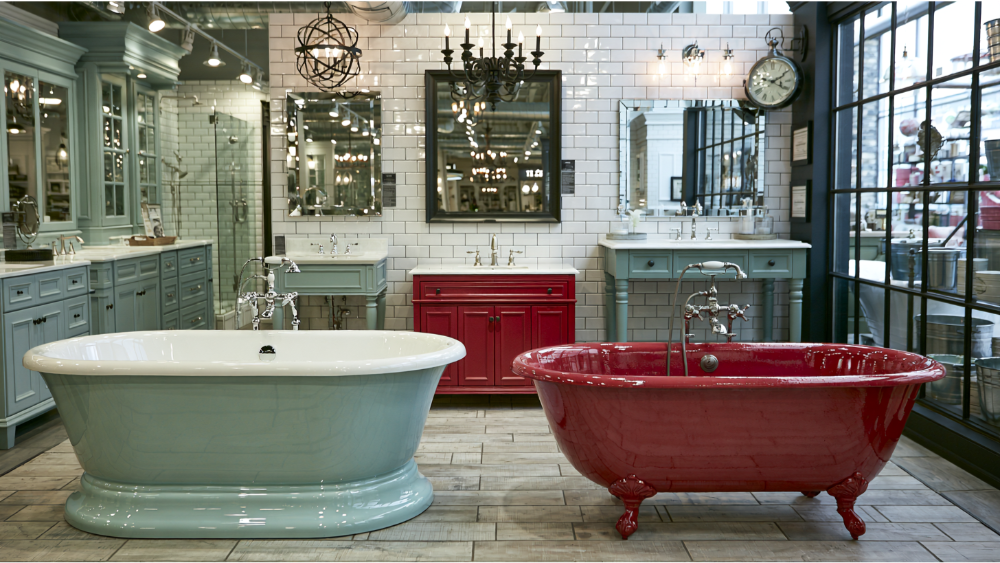
Material shapes how a bathtub feels, how well it holds heat, and how it holds up over years of use. The materials you choose also affect weight, cleaning, and long-term cost.
- Acrylic: Acrylic tubs are lightweight, available in many shapes and colors, and retain heat well for a warm soak. Lower-grade acrylic can scratch or stain, so quality matters.
- Fiberglass / composite: Light and easier to install, which is why it’s common. It’s thinner, though, and more prone to fading, scratching, or cracking over time.
- Porcelain enameled steel tubs: Durable and easy to clean, with a solid feel. The steel finish can chip if something hard strikes it.
- Cast iron: A cast iron tub retains heat beautifully and can last for decades with proper care. An iron tub is heavy, so your floor may need reinforcement before a new tub of this type goes in.
- Stone resin and solid surface: A smooth, seamless-feeling surface that works well for custom shapes and offers excellent heat retention.
- Natural stone and specialty materials: Striking and luxurious, but very heavy, which makes floor support and installation a real planning point.
Seeing and touching these materials in person tells you more than any photo. Our showroom lets you compare finishes and colors side by side before you commit, so the style you love is also the surface that performs and helps you find the perfect tub for your home.
How Much Space Do You Need? Size, Depth, and Comfort
Standard bathtubs run about 60 inches long, but ranges vary by type. General ballparks:
- Alcove: 60 to 72 in. long by 30 to 36 in. wide
- Freestanding: 60 to 67 in. long by 29 to 32 in. wide
- Drop-in: 60 to 72 in. long by 36 to 42 in. wide (the deck adds footprint)
- Walk-in: 48 to 60 in. long by 28 to 30 in. wide
- Corner: commonly around 60 x 60 in.
Outside dimensions aren’t the same as bathing comfort. A regular tub may be up to about 18 inches deep, while soaking tubs often start around 20 inches and go deeper. Consider step-over height for daily ease, and make sure the drain side matches your existing plumbing. Sitting in a tub in a showroom is the honest way to feel whether the depth and length suit you and your space before anything is ordered. In a small bathroom, the right tub reveals itself in the depth, since a shape that photographs well can still feel cramped in person, while a larger room may let you claim more space for the dream tub you’ve pictured.
What Your Contractor Should Verify Before You Order

A great tub choice can still go wrong if the details behind the walls don’t line up. Before you order, your contractor should confirm these important factors:
- Exact bathroom measurements, not rough estimates, matched to your bathroom layout
- Drain and overflow location versus your current plumbing
- Door and hallway access to physically move the tub into the room
- Subfloor condition and any needed repairs
- Floor support for heavy tubs, since water alone weighs about 8.33 pounds per gallon and a filled cast iron soaker adds up fast
- Water heater First Hour Rating, since deep tubs can range from roughly 40 to 200-plus gallons
- Plumbing valve requirements and space for a shower head or shower curtain if it’s a combo
- Waterproofing and surround materials for the walls
- Electrical and an access panel for air tubs, whirlpool tubs, and hydrotherapy jets
- Blocking for grab bars and other safety features when limited mobility or mobility issues may matter later
- Whether a permit is required
When one in-house team owns the plumbing, framing, waterproofing, tile, and finish, there are fewer handoffs and fewer surprises. That’s how these details get caught before demolition, not after, and how the true cost of your bathroom renovation stays clear from the start. If you can accommodate hydrotherapy options, planning the electrical early keeps the project on track.
Sacramento and California Remodel Considerations
For local homeowners, a few code points shape what’s possible. The City of Sacramento treats in-kind swaps of fixtures and finishes as a minor bathroom remodel permit, while structural changes trigger full plan review. The 2025 California Plumbing Code takes effect January 1, 2026. When a tub or shower surround is removed or a valve is replaced, control valves must be pressure-balanced or thermostatic. Walls above a tub with a showerhead must have a smooth, nonabsorbent finish at least 6 feet above the floor, and greenboard is not an acceptable substrate. Hot water to tubs is capped at 120°F, and water-conserving fixtures apply, such as showerheads limited to 1.8 gpm. These rules can also affect the overall cost of a bathroom renovation, so plan for them early. You can verify any California contractor through the CSLB. Capital Construction is licensed under CA Contractor License #793440.
Common Bathtub Remodel Mistakes to Avoid
Most tub regrets trace back to treating the choice like catalog shopping. The ones we see most often:
- Choosing style before confirming layout and use
- Picking a deep soaker without checking water heater capacity
- Squeezing a freestanding bathtub into a space too tight to clean around
- Ignoring which side the drain is on
- Forgetting access panels for jetted or air features
- Skipping grab-bar blocking in the framing when accessibility, like a future walk in bathtub, may matter later
- Buying before a contractor field-measures the room
- Underestimating the cost of moving plumbing for a new bathtub in a different spot
- Treating waterproofing as an afterthought instead of the foundation of a lasting tub surround and walls
How Capital Construction Helps You Choose With Confidence
We’re a family-owned company proudly rooted in Sacramento, and we treat your home the way we’d treat our own. Our in-house team handles the work start to finish, so plumbing, tile, waterproofing, and finish all stay under one accountable roof. We don’t outsource your project to third parties. Our showroom gives you a hands-on way to select materials, colors, and finishes, and our attention to detail means your bathtub integrates cleanly with the tile, flooring, cabinetry, and countertops around it. With transparent communication, upfront timelines and cost, self-reported 700-plus happy clients, and 20-plus years of experience, we bring your vision to life while protecting you from the common missteps. If you’re feeling overwhelmed by the choices, we’ll help you land on the perfect bathtub. Your Vision, Our Work.
Frequently Asked Questions
What trend is replacing bathtubs in bathroom design?
Curbless and walk-in showers are popular in primary suites for their open feel and easier entry. Even so, keeping one bathtub somewhere in the home is often smart for resale and for families with young children.
What tubs do plumbers recommend?
It depends on how you’ll use it. Durable acrylic tubs in an alcove are a reliable pick for busy family bathrooms, while a cast iron tub wins on heat retention and longevity where the floor can support the weight of the iron tub.
What are the most regretted bathroom upgrades?
Oversized soaking tubs that rarely get used, freestanding tubs that are hard to clean around, and specialty jetted tubs with demanding upkeep top the list. Matching the tub to real daily habits avoids all three.
What is the average cost of a bathtub remodel?
Cost depends on the tub type, materials, plumbing changes, and surround work, so a single figure would be misleading. The most accurate way to plan your budget and the real cost is a free, no-obligation estimate based on your actual bathroom.
Ready to Reimagine Your Bathroom? Let’s Talk
The best bathtub is the one that supports your life and your home’s realities. Visit our showroom to feel the materials and options in person, or schedule a Free* No-Obligation Estimate and we’ll help you choose the right bathtub with confidence. Call (916) 277-8282 or email design@capitalconstruction.com. Family-owned, proudly rooted in Sacramento, and licensed under CA Contractor License #793440.