A Step-by-Step Guide for Sacramento Homeowners

A kitchen remodel is one of the most valuable upgrades a homeowner can make, but it also involves careful planning, scheduling, and coordination. Many homeowners ask, how do contractors phase kitchen remodel construction, and what should they expect during the entire process? Understanding the order of each phase helps homeowners prepare for the renovation, avoid costly changes, and maintain realistic expectations from beginning to project completion.
At Capital Construction, we help Sacramento homeowners navigate kitchen remodeling projects with clear communication, organized scheduling, and experienced project management. Whether the goal is updating cabinets countertops and flooring, adding custom cabinets, relocating plumbing lines, or performing structural work, every kitchen renovation follows a specific sequence designed to help the project work effectively.
This guide explains how do contractors phase kitchen remodel construction during the complete kitchen renovation timeline, including planning and design, demolition, rough plumbing, electrical wiring, cabinet installation, flooring installation, installing countertops, appliance installation, final inspection, and finishing details.
Why Contractors Phase a Kitchen Remodel in a Specific Sequence
Most kitchen remodels involve several trades working together in a controlled construction environment. Contractors must coordinate plumbing, electrical work, structural modifications, cabinets, countertops, flooring, and appliances in the proper order so the kitchen renovation functions properly after project completion.
Without an organized construction schedule, multiple contractors may overlap tasks incorrectly, causing delays, failed inspections, damaged materials, and unnecessary expenses. A professional general contractor uses a phased process to keep the project timeline organized and efficient.
Kitchen remodeling projects also require careful code compliance. Contractors must ensure plumbing work, gas lines, electrical upgrades, structural changes, and ventilation systems meet current building codes before moving to the next phase.
Planning ahead helps contractors avoid delays caused by material availability, permit approvals, and inspection scheduling. Many homeowners are surprised to learn how much coordination happens before construction begins.
Phase 1 | Initial Planning and Project Scope Development
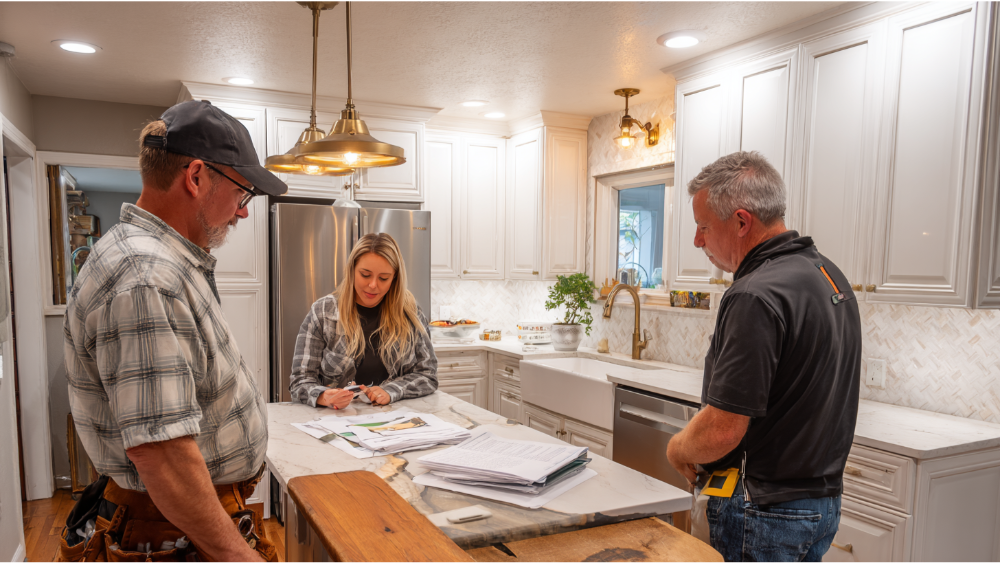
Every successful kitchen remodel starts with initial planning. Before demolition begins, contractors meet with homeowners to define the project scope, establish a realistic budget, and identify the overall goals for the renovation.
Understanding the Homeowner’s Goals
During the planning and design phase, contractors evaluate how homeowners currently use the kitchen and what improvements they want to make. Some homeowners want additional storage, while others prioritize open layouts, entertaining space, or upgraded appliances.
Important considerations often include cabinets and storage functionality, countertops and prep space, flooring durability, appliance placement, lighting improvements, plumbing relocation, structural changes, traffic flow, seating areas, and ventilation upgrades.
Many homeowners also choose to include custom cabinets, upgraded flooring, and new appliances during a kitchen renovation to improve both function and appearance.
Establishing the Project Scope
The project scope determines what work will be completed during the kitchen remodel. Some kitchen remodeling projects involve cosmetic updates only, while others require major structural work and plumbing modifications.
The project scope may include cabinet installation, installing countertops, flooring installation, structural modifications, new plumbing, electrical upgrades, appliance installation, wall removal, custom cabinets, new plumbing lines, gas lines relocation, and water lines replacement.
Defining the project scope early helps homeowners manage expectations and reduce costly changes later in the process.
Creating a Realistic Budget
Creating a realistic budget is one of the most important parts of planning and design. Contractors help homeowners understand the cost of labor, materials, permits, custom cabinets, countertops, appliances, flooring, and structural changes.
Kitchen renovation costs vary depending on:
- Kitchen size
- Material selections
- Structural work
- Cabinet quality
- Plumbing work
- Appliance upgrades
- Flooring selections
- Construction complexity
Hiring experienced professionals helps homeowners avoid mistakes that may increase expenses later in the renovation.
Evaluating Existing Conditions
Before the project begins, contractors inspect existing walls, plumbing lines, electrical wiring, water lines, and structural elements. Older homes throughout Sacramento often require code compliance updates during a kitchen renovation.
Experienced professionals evaluate:
- Existing plumbing
- Electrical work
- Gas lines
- Structural elements
- Ventilation systems
- Flooring conditions
- Wall framing
- Appliance clearances
This phase helps identify unexpected issues before construction begins.
Phase 2 | Planning and Design for the Kitchen Renovation
Once the initial planning phase is complete, contractors move into detailed planning and design. This stage focuses on layouts, materials, scheduling, and ordering products before demolition begins.
Finalizing the Layout
A successful kitchen remodel depends on a functional layout. Contractors work with homeowners to optimize cabinets countertops appliances and workflow.
Modern kitchen renovation layouts often include:
- Open concepts
- Large islands
- Walk in pantries
- Expanded storage
- Additional seating
- Better traffic flow
- Improved lighting
The planning and design stage also determines whether structural changes or structural modifications are necessary.
Selecting Materials
Material selections directly affect the project timeline and construction schedule. Contractors help homeowners select quality materials that match both the design vision and budget.
Common kitchen renovation materials include:
Cabinets
- Shaker cabinets
- Flat panel cabinets
- Custom cabinets
- Wood cabinets
- Soft close cabinets
Countertops
- Quartz countertops
- Granite countertops
- Marble countertops
- Porcelain countertops
Flooring
- Tile flooring
- Hardwood flooring
- Laminate flooring
- Luxury vinyl flooring
Appliances
- Refrigerators
- Dishwashers
- Ovens
- Cooktops
- Vent hoods
Many homeowners prioritize durable materials because kitchens experience heavy daily use.
Ordering Materials Before Construction Begins
Contractors typically wait for critical materials before demolition begins. Cabinets, countertops, flooring, and appliances may require several weeks for delivery.
Planning ahead helps prevent delays caused by poor material availability. Ordering cabinets countertops flooring and appliances early keeps the kitchen renovation timeline moving efficiently.
Building the Construction Schedule
The construction schedule coordinates subcontractors, inspections, deliveries, and installation dates.
A general contractor organizes:
- Plumbing work
- Electrical work
- Flooring installation
- Cabinet installation
- Installing countertops
- Appliance installation
- Final inspection
- Finishing details
A clear construction schedule helps multiple contractors work effectively without interfering with each other.
Phase 3 | Permits and Code Compliance

Before construction begins, contractors obtain permits when required.
Why Permits Matter
Kitchen remodeling projects involving plumbing, electrical wiring, gas lines, or structural work typically require permits.
Permit requirements often apply to:
- Structural changes
- Plumbing lines relocation
- New plumbing
- Electrical upgrades
- Gas lines installation
- Ventilation improvements
- Structural modifications
Contractors also ensure the project meets current building codes and local code compliance requirements.
Required Inspections During the Project
Required inspections occur throughout the renovation to verify safety and proper installation.
Inspectors review:
- Plumbing work
- Rough plumbing
- Electrical wiring
- Structural elements
- Gas lines
- Ventilation systems
- Appliance connections
Experienced professionals understand inspection requirements and help homeowners avoid failed inspections.
Why Hiring Experienced Professionals Matters
Hiring experienced professionals reduces delays, protects homeowners from code violations, and helps maintain the project timeline.
A qualified general contractor coordinates permits, inspections, materials, scheduling, and subcontractors throughout the entire process.
Phase 4 | Demolition and Site Preparation
Once permits are approved and materials arrive, demolition begins.
Protecting the Home Before Demolition
Before demolition begins, contractors protect nearby flooring, walls, and living areas.
Protection measures may include dust barriers, floor coverings, plastic containment, air filtration systems, and temporary pathways.
Many homeowners stay in the home during construction, making dust control especially important.
Removing Existing Materials
The demolition phase removes old:
- Cabinets
- Countertops
- Flooring
- Appliances
- Plumbing fixtures
- Drywall
- Walls
- Lighting
Demolition creates space for the new kitchen renovation layout.
Identifying Unexpected Issues
During demolition, contractors sometimes discover unexpected issues hidden behind walls or beneath flooring.
Common problems include:
- Water damage
- Mold
- Damaged plumbing lines
- Unsafe electrical wiring
- Structural problems
- Rotting framing
- Old gas lines
Addressing unexpected issues early helps protect the quality and safety of the renovation.
Phase 5 | Rough Construction and Mechanical Installation
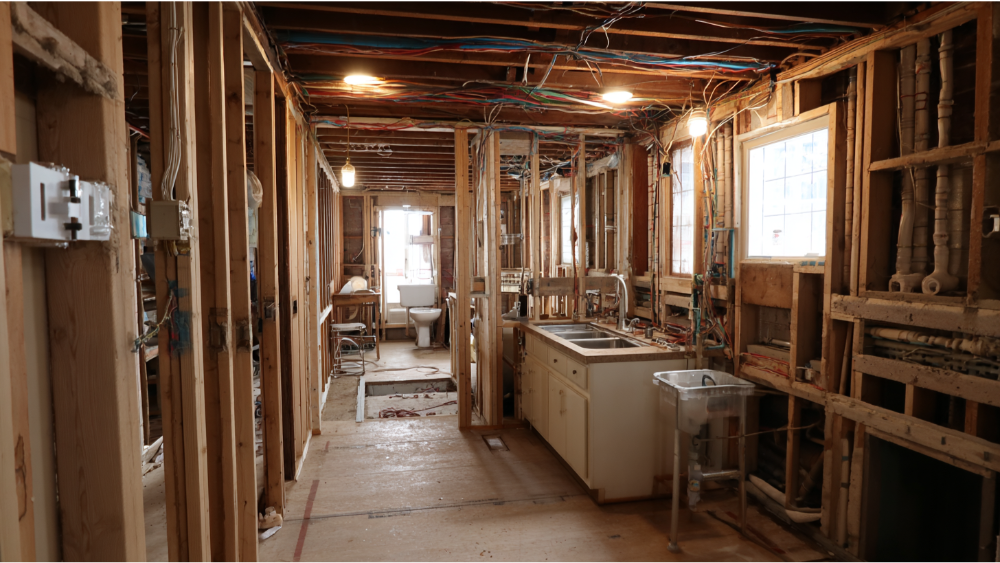
After demolition is complete, rough construction begins.
Structural Work and Framing
Structural work may involve:
- Removing walls
- Reinforcing framing
- Installing support beams
- Expanding openings
- Structural modifications
Structural changes are common in kitchen remodeling projects that convert closed kitchens into open layouts.
Rough Plumbing Installation
Plumbers install rough plumbing before walls are closed.
This phase may include new plumbing, water lines, drainage systems, plumbing lines, gas lines, refrigerator connections, and sink relocation.
Proper plumbing installation ensures the kitchen functions properly after project completion.
Electrical Wiring and Electrical Upgrades
Electricians complete electrical wiring and electrical upgrades before drywall installation.
Electrical work often includes:
- Appliance circuits
- Lighting installation
- Outlet relocation
- Smart controls
- Dedicated circuits
- Under cabinet lighting
Modern appliances often require updated electrical capacity.
HVAC and Ventilation Improvements
Ventilation systems are important for comfort and code compliance.
Contractors may install:
- Vent hoods
- Ductwork
- Exhaust systems
- Airflow improvements
Required Inspections Before Closing Walls
Required inspections occur before drywall installation begins.
Inspectors review rough plumbing, electrical wiring, gas lines, and structural work before contractors close walls.
Passing inspections keeps the project timeline moving forward.
Phase 6 | Drywall, Painting, and Surface Preparation
Once inspections are complete, contractors begin rebuilding the visible surfaces of the kitchen.
Drywall Installation
Drywall crews repair and finish walls and ceilings.
This phase includes:
- Drywall hanging
- Taping
- Texture work
- Ceiling repairs
- Wall preparation
Smooth walls create the foundation for quality finishes.
Painting and Surface Finishing
Painting usually occurs before cabinet installation.
Painters apply:
- Primer
- Paint
- Ceiling finishes
- Trim coatings
Neutral colors remain popular in many kitchen renovation projects throughout Sacramento.
Preparing for Cabinet Installation
Contractors verify measurements and level surfaces before cabinet installation begins.
Cabinets define the overall appearance and layout of the kitchen, making precision critical during this phase.
Phase 7 | Cabinet Installation and Installing Countertops
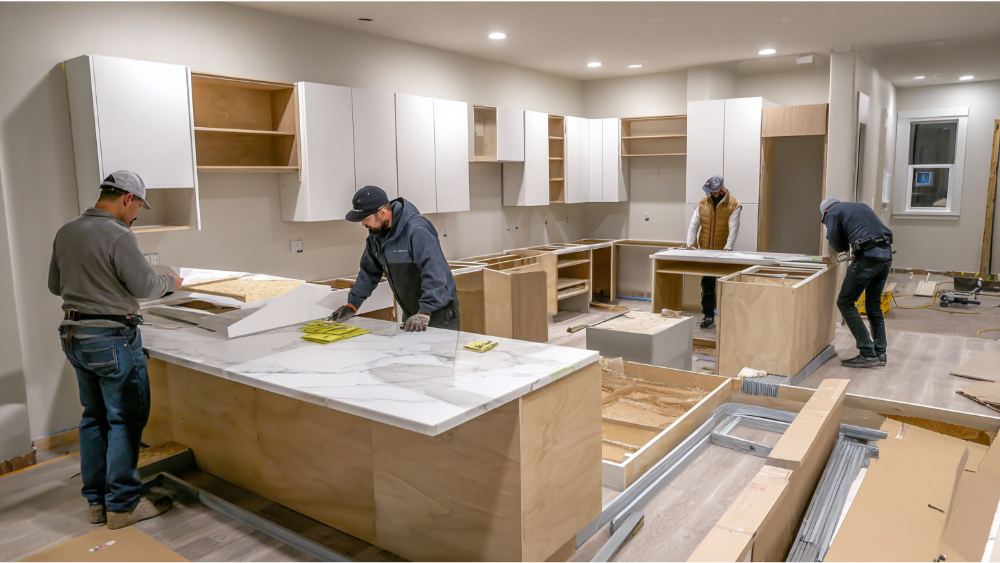
This is the phase where the kitchen begins taking shape visually.
Cabinet Installation Process
Cabinet installation is one of the most important stages of a kitchen remodel.
Contractors install:
- Base cabinets
- Upper cabinets
- Pantry cabinets
- Island cabinets
- Custom cabinets
Cabinet installation must be precise so countertops, appliances, and cabinet hardware align correctly.
Improper cabinet installation can affect:
- Countertop fit
- Appliance spacing
- Drawer operation
- Flooring alignment
- Finishing details
Experienced professionals carefully level cabinets to ensure proper installation.
Installing Countertops
Installing countertops typically occurs after cabinet installation is complete.
Contractors measure cabinets countertops appliances and walls before fabrication.
Installing countertops may involve:
- Quartz countertops
- Granite countertops
- Waterfall edges
- Backsplashes
- Seam alignment
Proper installation is essential because countertops affect both appearance and functionality.
Flooring Installation Timing
Flooring installation may happen before or after cabinet installation depending on the flooring material and construction approach.
Popular flooring choices include:
- Tile flooring
- Hardwood flooring
- Waterproof flooring
- Luxury vinyl flooring
Contractors coordinate flooring installation carefully to avoid damaging cabinets and countertops.
Phase 8 | Appliance Installation and Finishing Details
Once cabinets countertops flooring and walls are complete, contractors begin installing appliances and final details.
Appliance Installation
Appliance installation includes:
- Refrigerators
- Dishwashers
- Cooktops
- Ovens
- Microwaves
- Vent hoods
Contractors verify all appliances connect properly to plumbing lines, gas lines, water lines, and electrical wiring.
New appliances often require testing to ensure everything functions properly.
Plumbing and Fixture Connections
Plumbers complete final plumbing work during this phase.
This includes:
- Faucets
- Sinks
- Garbage disposals
- Water filtration systems
- Pot fillers
Electrical Finish Work
Electricians install:
- Switches
- Outlets
- Lighting fixtures
- Smart controls
- Under cabinet lighting
Electrical work must meet code compliance requirements before final inspection.
Finishing Details
Finishing details help transform the kitchen renovation from a construction project into a completed living space.
Final details may include cabinet hardware, trim installation, paint touch ups, caulking, crown molding, and toe kicks.
Finishing details are important because they influence the final appearance and quality of the kitchen remodel.
Phase 9 | Final Inspection and Project Completion
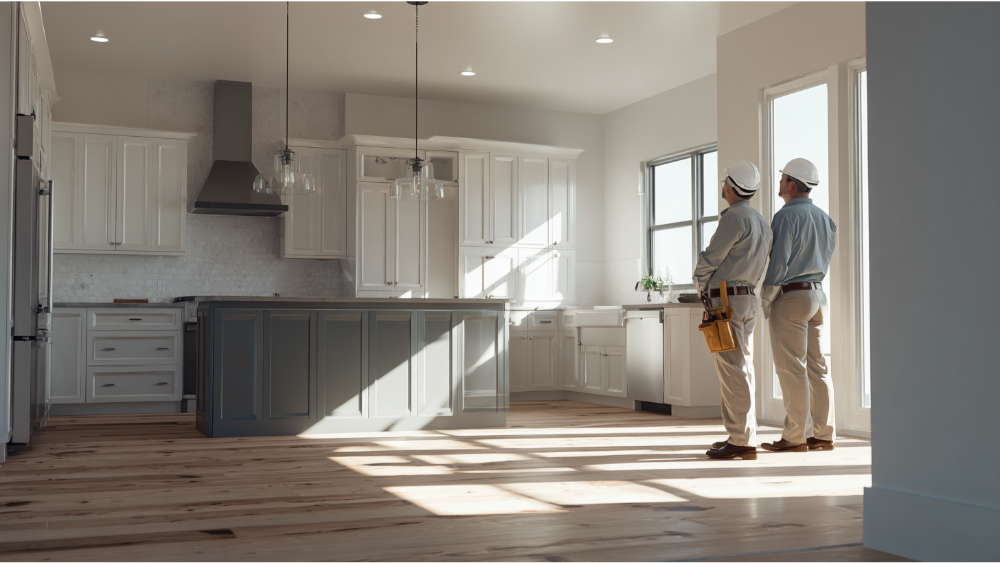
The final phase focuses on final inspection, quality control, and project completion.
Final Inspection Process
During final inspection, contractors verify:
- Appliances operate correctly
- Plumbing functions properly
- Electrical work meets code compliance
- Cabinets align properly
- Countertops fit correctly
- Flooring installation is complete
- Walls and finishes meet quality standards
Inspectors may also review gas lines, plumbing lines, and structural elements before issuing final approval.
Final Walkthrough With Homeowners
The final walkthrough allows homeowners to review the completed kitchen renovation.
Contractors explain:
- Appliance operation
- Maintenance recommendations
- Warranty coverage
- Cleaning procedures
- Final details
The final walkthrough also gives homeowners an opportunity to ask questions before project completion.
Common Delays During a Kitchen Renovation Timeline
Even experienced professionals occasionally encounter delays during kitchen remodeling projects.
Material Availability Issues
Cabinets, countertops, flooring, and appliances may require several weeks for delivery.
Poor material availability can affect the typical kitchen renovation timeline.
Structural Changes and Hidden Problems
Structural changes often reveal hidden problems inside walls.
Unexpected issues may include:
- Damaged framing
- Outdated plumbing
- Unsafe electrical wiring
- Water damage
- Mold
These discoveries sometimes extend the kitchen renovation timeline.
Permit and Inspection Delays
Permit corrections or failed inspections may delay construction.
Experienced professionals help homeowners reduce these risks through proper planning and code compliance.
How Long Does a Kitchen Remodel Usually Take?
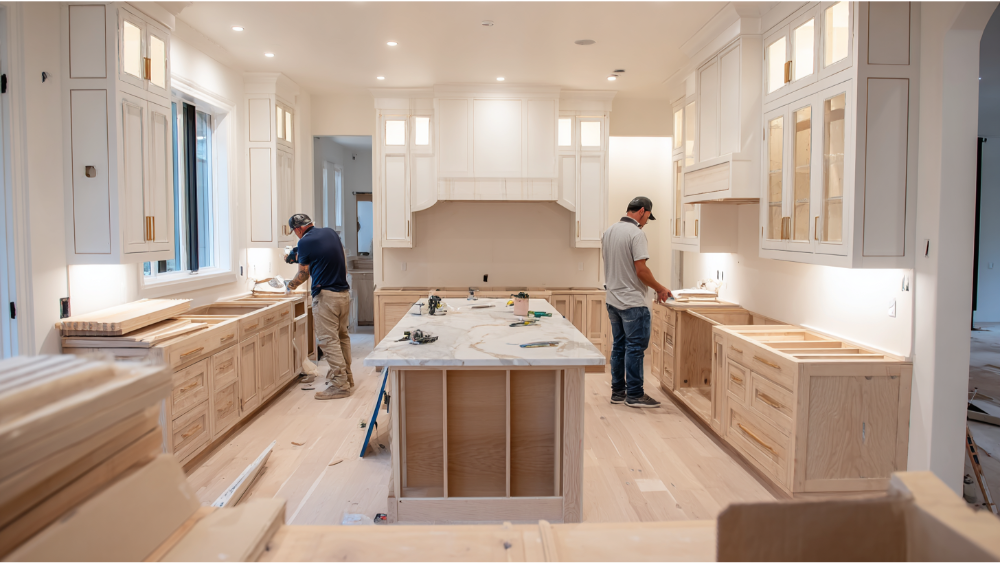
Many homeowners ask, long does a kitchen renovation actually take from start to finish?
The answer depends on project scope, structural work, material availability, and construction complexity.
A typical kitchen renovation timeline often includes:
- Planning and design, 2 to 6 weeks
- Permits and ordering materials, 2 to 8 weeks
- Demolition and rough construction, 1 to 3 weeks
- Cabinet installation and installing countertops, 2 to 4 weeks
- Flooring installation and appliance installation, 1 to 2 weeks
- Final inspection and finishing details, several days
Most kitchen remodels take between 8 and 16 weeks depending on customization and structural modifications.
Why Professional Project Management Matters
Kitchen remodeling projects involve many moving parts.
A professional general contractor helps homeowners manage expectations, coordinate multiple contractors, and maintain the project timeline.
Coordinating Multiple Contractors
Kitchen renovation projects often involve:
- Plumbers
- Electricians
- Flooring installers
- Cabinet installers
- Countertop fabricators
- Appliance specialists
- Painters
A general contractor ensures every phase happens in the proper order.
Maintaining Clear Communication
Clear communication helps homeowners understand progress, scheduling changes, and next steps throughout the renovation.
Many homeowners feel less stressed when contractors provide regular updates during construction.
Protecting Quality Throughout the Entire Process
Experienced professionals monitor:
- Material quality
- Proper installation
- Construction safety
- Code compliance
- Scheduling efficiency
- Finishing details
This oversight improves the final quality of the kitchen remodel.
Frequently Asked Questions About Kitchen Remodel Construction
How long does a kitchen remodel usually take?
Most kitchen remodels take between 8 and 16 weeks depending on project scope, materials, permits, and structural work.
Can homeowners stay in the house during construction?
Yes, many homeowners stay in the home during a kitchen renovation, although temporary cooking arrangements are usually necessary.
What phase takes the longest?
Cabinet installation, installing countertops, inspections, and custom cabinets often require the most time.
Are permits required for a kitchen remodel?
Permits are commonly required when plumbing work, electrical work, gas lines, or structural changes are involved.
Why is planning ahead important?
Planning ahead helps contractors coordinate materials, inspections, appliances, cabinets, countertops, flooring, and scheduling more efficiently.
Work With a Sacramento General Contractor You Can Trust
A successful kitchen remodel requires more than beautiful cabinets countertops appliances and flooring. It requires organization, planning and design, experienced professionals, clear communication, quality materials, and careful project management.
At Capital Construction, we help homeowners throughout Sacramento complete kitchen remodeling projects with confidence. From the moment the project begins until final walkthrough and project completion, our team coordinates every phase of construction carefully.
Whether your kitchen renovation includes custom cabinets, structural modifications, electrical upgrades, plumbing lines relocation, flooring installation, installing countertops, or appliance installation, our experienced professionals are committed to delivering quality craftsmanship and dependable results.
If you are planning a kitchen remodel and want guidance from a trusted Sacramento general contractor, contact Capital Construction today to schedule your consultation. Our team is ready to help bring your renovation vision to life.